
AI teaching use cases
How do our coaches integrate efficient, creative and responsible AI strategies in our teaching of academic subjects and industry knowledge to empower students with AI fluency?
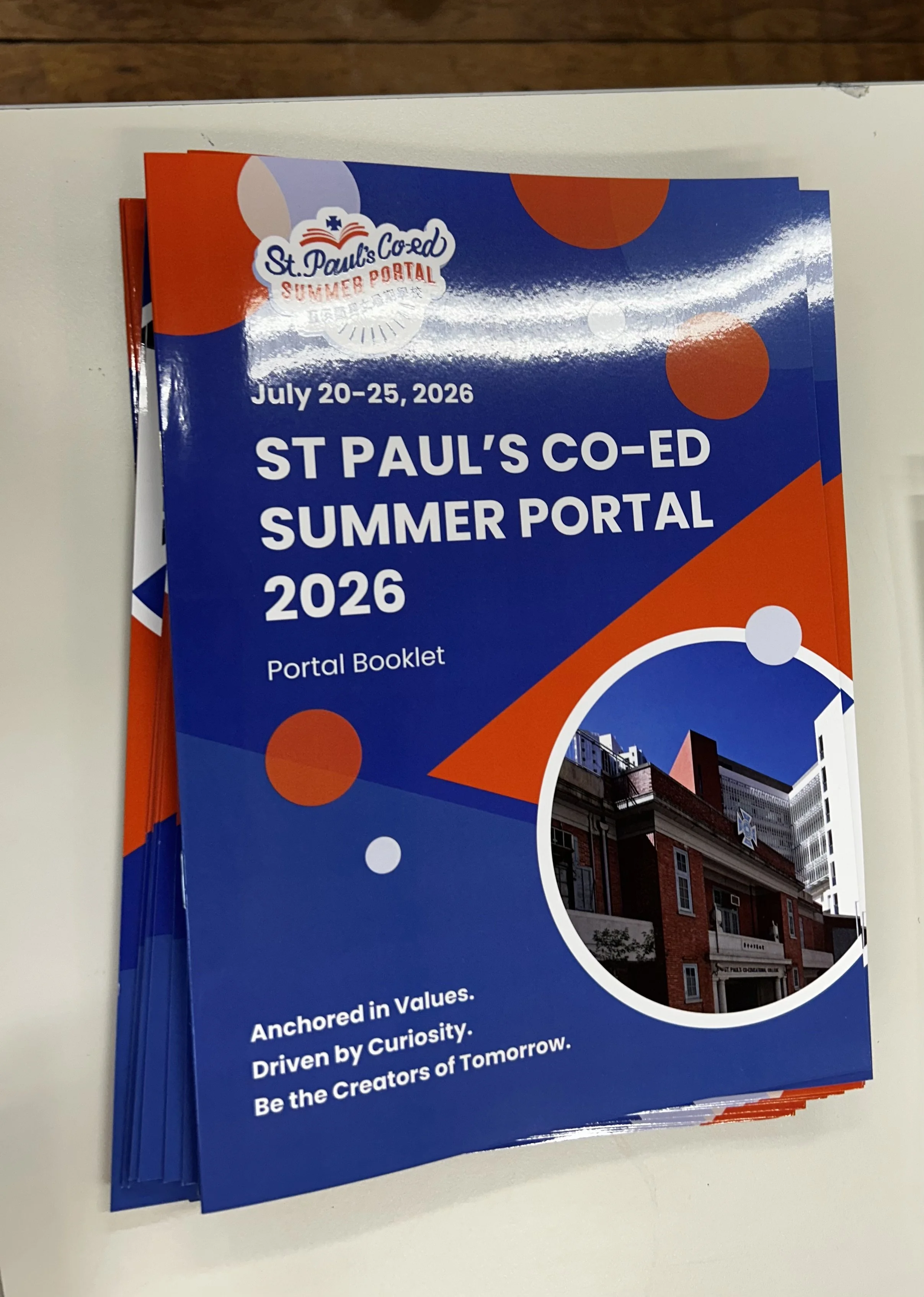
St Paul’s Co-ed Summer Portal 2026 (20-25 July 2026)
In July 2026, Genesis Learning was the designated AI curriculum partner for the 2026 St Paul’s Co-ed Summer Portal initiative, and our team had the privilege of coaching more than 100 students at St Paul’s Co-educational College, one of Hong Kong’s most prestigious schools. We designed and delivered 4 AI Fluency programmes across the week: AI for medicine, AI for forensic sciences and law, AI for graffiti arts, and our flagship AI for academic learning (AI concepts, English, STEM, Creative Arts) course.
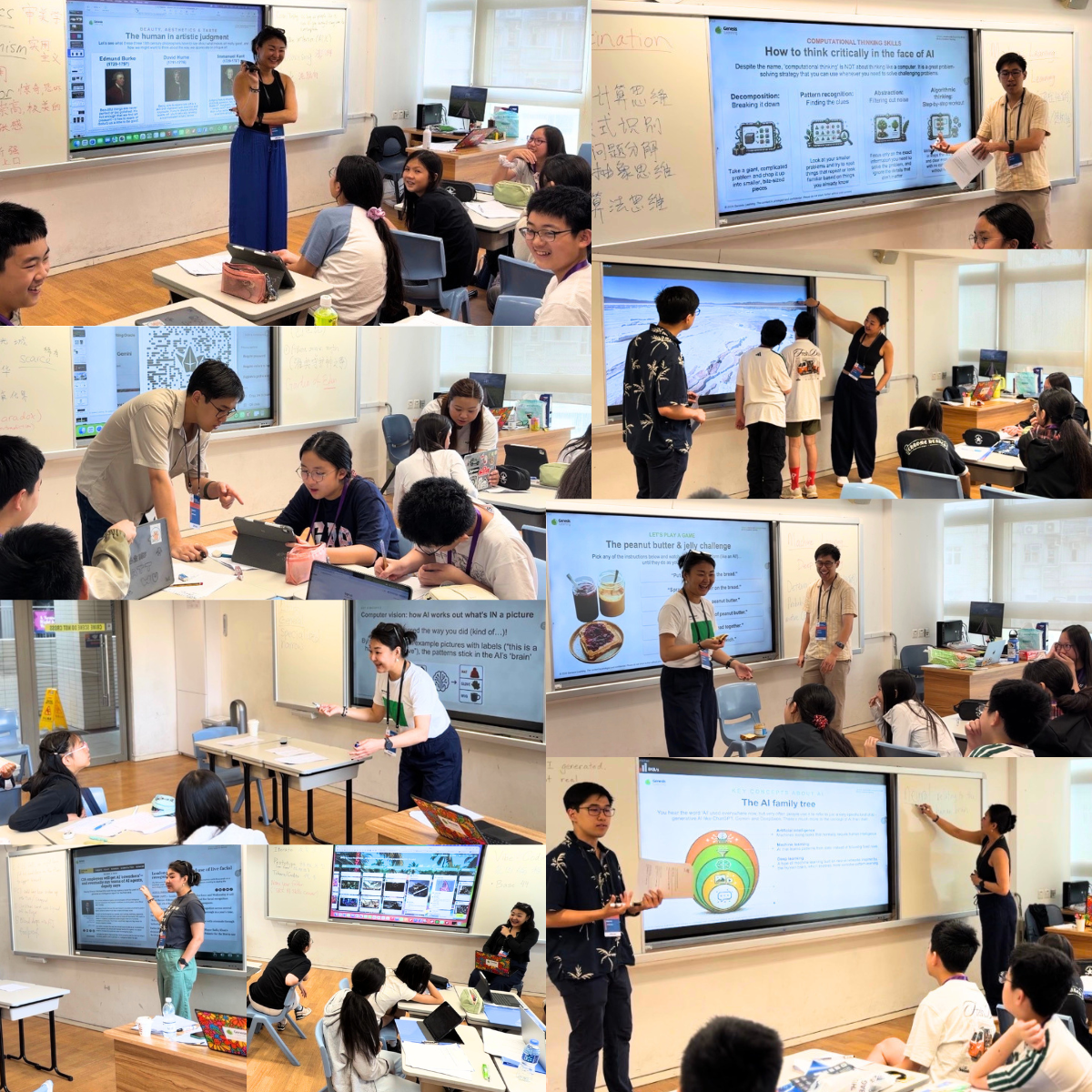
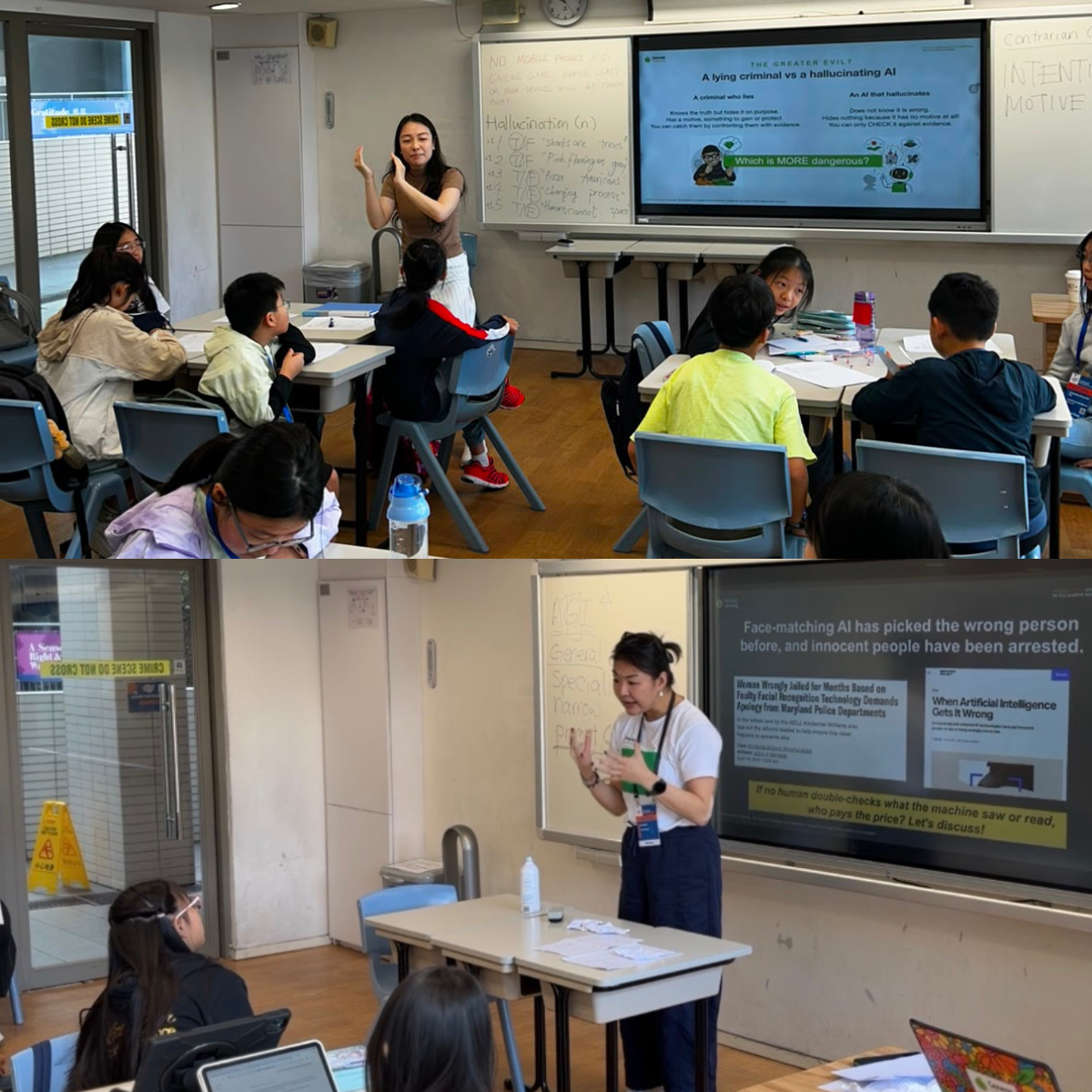
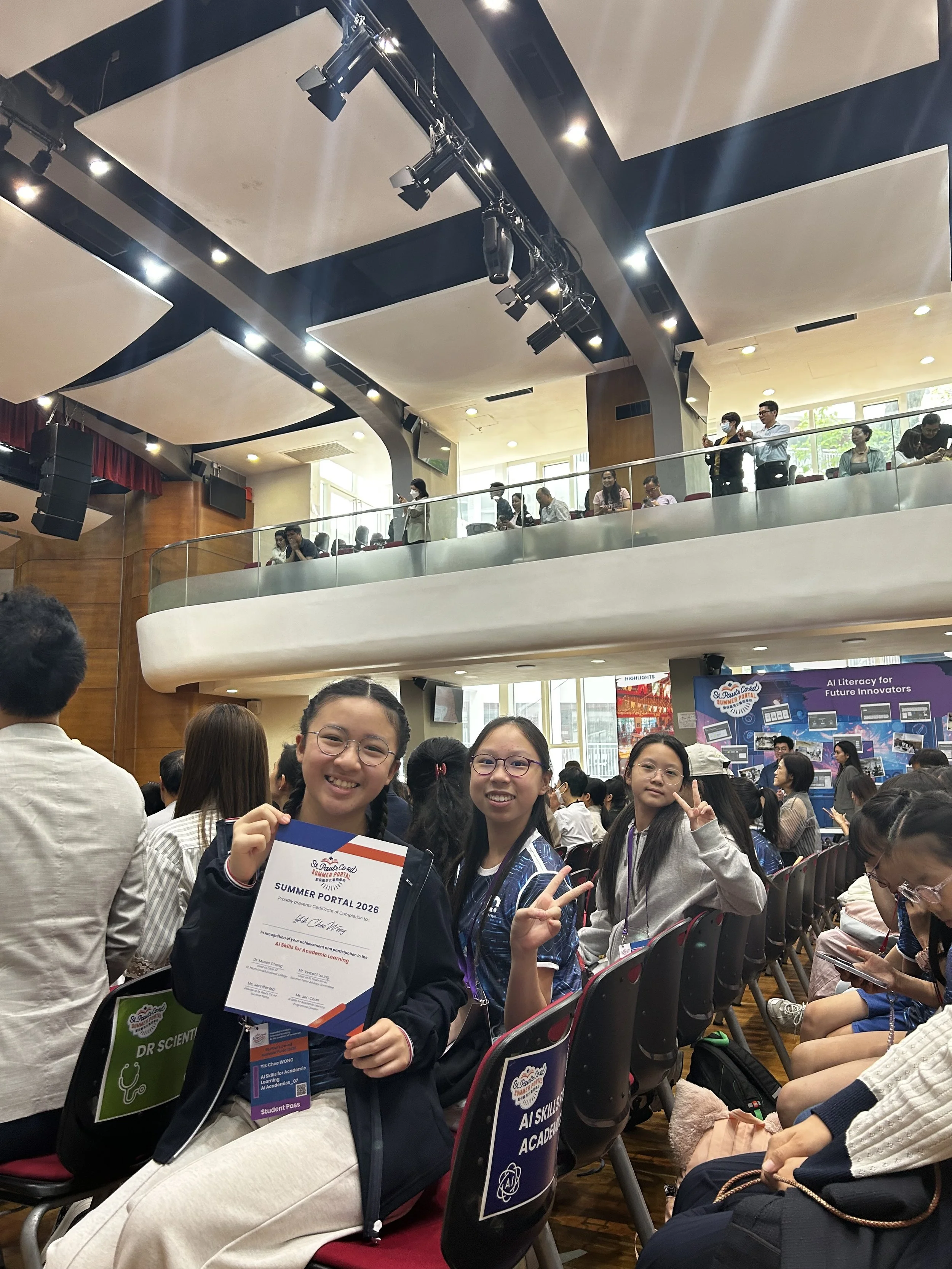
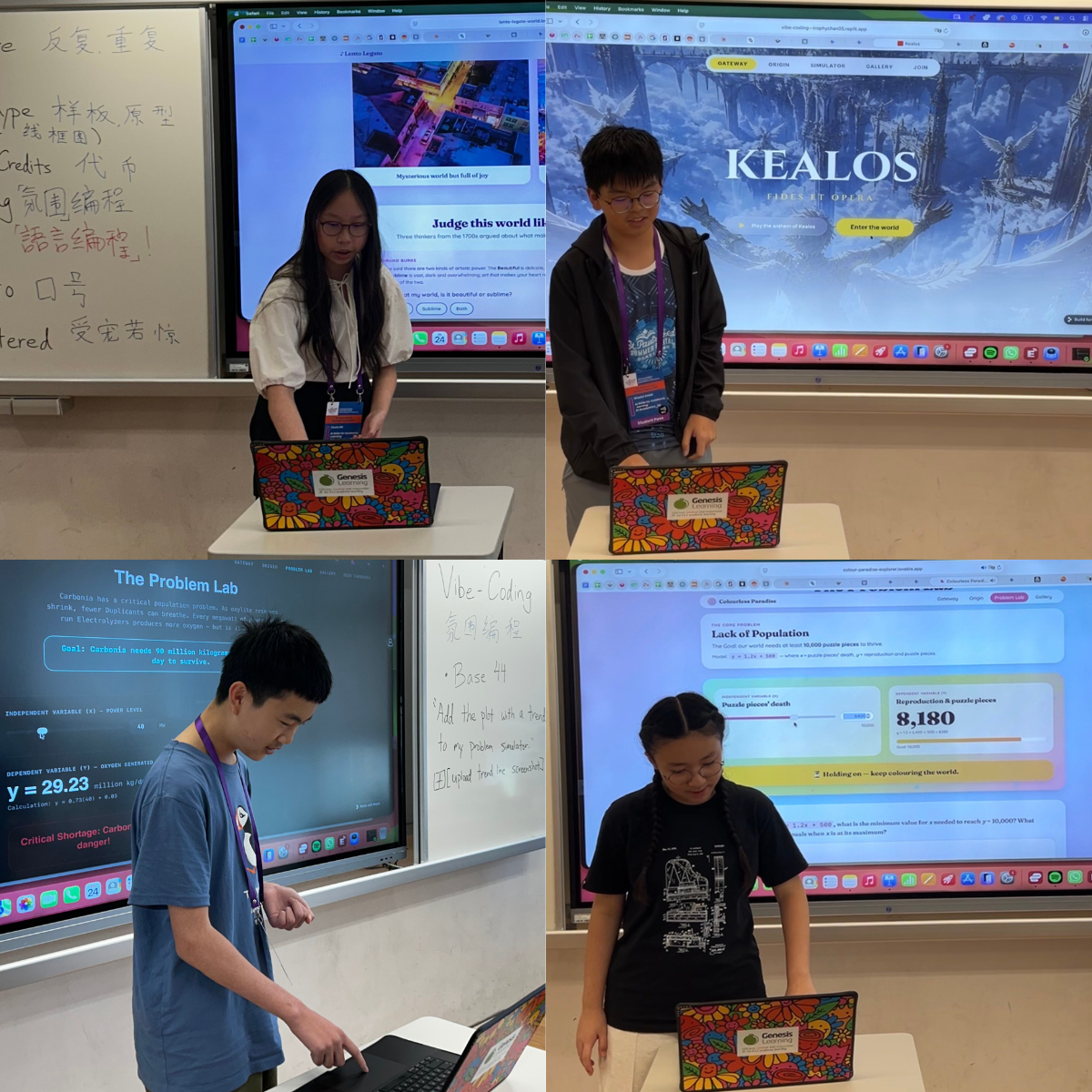
Bringing human-AI co-learning into a school classroom confirmed something we had long believed. An AI-fluent approach to teaching looks very different from a traditional one. It rewards communication, strategic thinking and adaptability, and it treats self-awareness as a prerequisite, because students are telling AI systems what they want to achieve and how they want to be helped. When the first attempt misses, and the second, and the third, they keep instructing until it lands. Giving clear guidance and managing unpredictability are exactly the skills children need in the world outside the classroom.
So coding still matters, and so do vocabulary and verbal precision. Our AI for Academic Learning students ended the week with a beautiful, fully functional vibe-coded app, complete with simulators, quizzes and audio-visual features, and we never taught a line of Python.
We remain unconvinced by the AI school and the AI-as-teacher model, and we expect demand for educators to grow over the next decade. That demand will rest on qualities that are much less cerebral than subject expertise: energy, presence and warmth. When people ask what we mean by teaching AI, our answer is that the whole point is for students to understand where they would rather not use it, and to ask what remains distinctly human once AI can do so much on our behalf.
Laughter, attention, safety and respect are what students most want from learning, and for now those can only come from a flesh-and-blood person at the front of the room or beside a desk. AI sits alongside that, opening creative ways into knowledge, lowering the threshold of academic understanding, and accelerating how quickly a student picks up a new skill.
Discover our AI fluency modules
-
Before a student uses an AI tool well, they need a working mental model of what it is doing. This module builds that model through games and direct experience rather than explanation, covering how generative systems produce their output, why they sound confident when they are wrong, and where each student personally wants to draw the line.
How a generative model actually decides. Students work through unplugged activities that expose prediction and probability as the mechanism behind the output, so the system stops feeling like magic and starts feeling like something they can direct.
Confidence, accuracy and hallucination. Students put questions to Gemini and Claude where they already know the answer, including several the models get wrong, and record how confident each response sounds. Fluency and accuracy come apart in front of them within minutes.
Writing your own AI-use charter. Each student drafts a short set of rules governing how AI may be used in their own work, then has to honour it across the rest of the programme. Responsible use becomes something they authored rather than a policy handed to them.
-
English is where the temptation to let AI do the thinking is strongest, so sequencing matters more here than anywhere else. Students draft entirely without AI first, then bring AI in as a reader that asks questions rather than a writer that supplies sentences, and finish able to explain the logic of their own work line by line.
The unassisted first draft. Students write their opening draft timed and in the room with no AI at all, so there is a genuine authorial voice on the page before any model sees the work.
AI as a Socratic reader. Our custom built AI-powered app Genesis Writing Coach is designed to withhold. It interrogates an argument, shows a student where the evidence thins, and asks what they meant by a vague phrase, without ever producing replacement prose.
Structuring a narrative under pressure. Working through an eight-step scaffold from a hero's central power and matching flaw to a closing cliffhanger, students use AI to pressure-test structure while every emotional decision stays with the writer.
-
Language models can be unreliable with numbers, which makes STEM the natural home for verification. Students predict before they calculate, work problems where every figure is derivable from the material in front of them, and then reconcile their own working against the model's. They finish by building something that runs.
Catching a confident error. Our problems are designed so the model's mistake is catchable rather than merely warned about. Students locate the exact step where the reasoning parted company from their own, which turns vague advice about checking AI output into a repeatable habit.
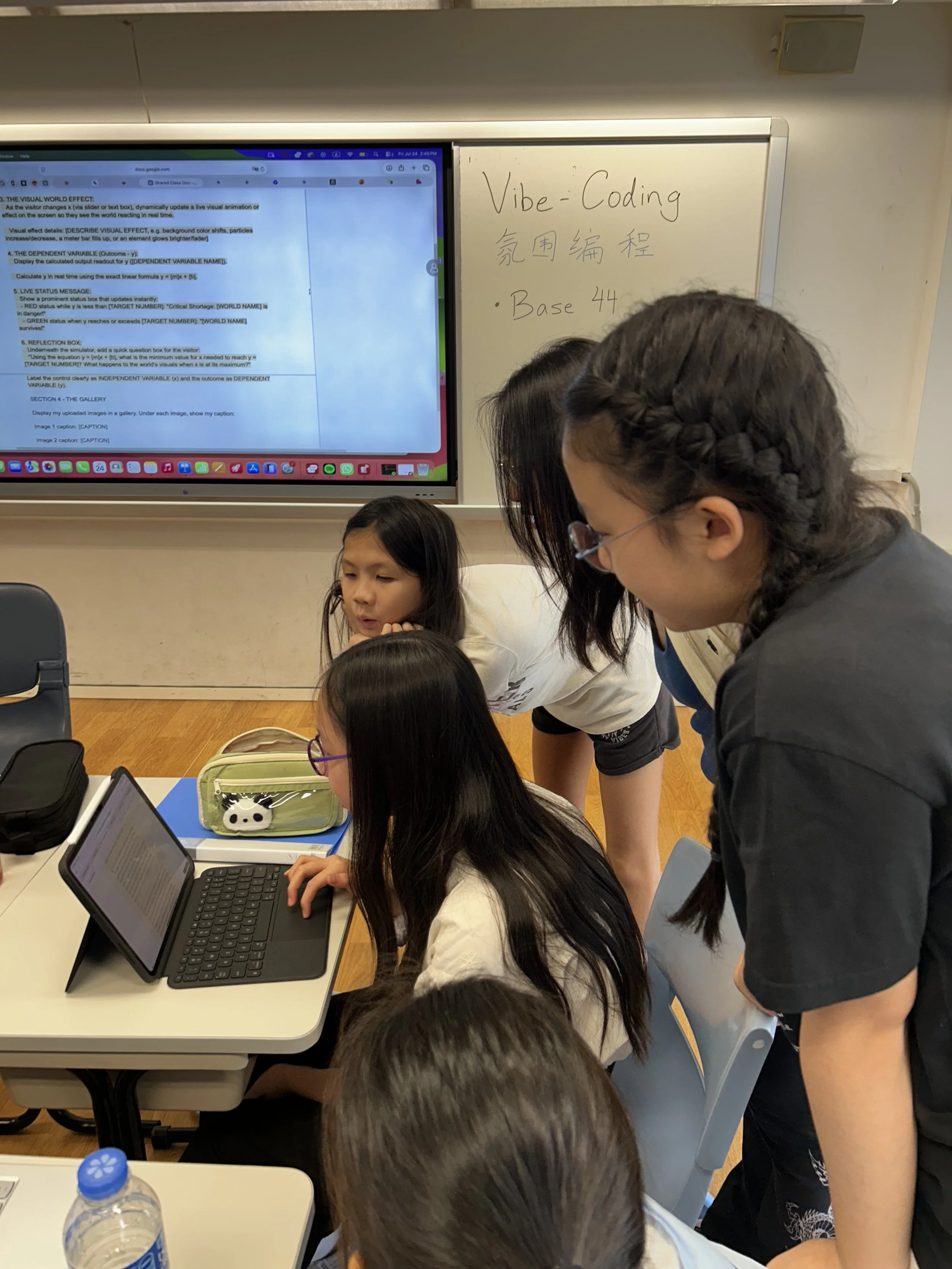
Building a working tool through vibe-coding. Students describe a calculator, visualiser or simulator in natural language and iterate when the build breaks. Debugging by conversation teaches specification, and students learn that most failures come from an underspecified request rather than an incapable model.
The transfer test. Every module closes with an unassisted problem. It is the cold check on whether understanding actually transferred, and it keeps the emphasis on what the student can now do alone.
-
Students compose an original anthem for a world of their own founding. The module begins in private reflection and unassisted lyric writing, then moves into generative tools, where the quality of what comes back depends entirely on how precisely a student can name what they want to hear.
Musical vocabulary as creative direction. Students build a working bank of terms across genre, instrumentation, tempo, texture, vocal style and mood, then use it to direct a track. Precision of language becomes audibly the difference between a generic output and the one they intended.
Directing a generative music tool. Working with Gemini and Suno, students keep a prompt journal across successive attempts, so they can point to which change produced which result. Iteration is treated as the skill rather than as evidence of failure.
Lyrics before tools. Students write from a personal reflection with no AI involved. Because the words carry something real to them, they become unusually demanding of the arrangement that comes back, and they push rather than accept.
-
Students read visual culture before they generate any of it. Working with street art from Berlin's East Side Gallery and Beijing's 798 Art District, they record their own interpretation first, then use our tools to reach a perspective they had not arrived at alone, before moving into image generation and style work of their own.
Independent interpretation before consultation. Sixty seconds of silent looking, then a four-field analysis completed by hand. Only then does our Genesis Art Motif Decoder respond, and it is built to react to a student's thinking rather than lecture them on art history.
Precise vocabulary as prompt craft. Students expand their descriptive range across subject, setting, mood, style, medium and lighting, guided by a tool that never supplies a word and only asks questions. A typical student reaches fifteen vocabulary upgrades in ten minutes.
Style mash-up and iteration. Combining two visual traditions into a single piece through successive prompt revisions, students keep an iteration log alongside the image, so the reasoning behind the final work is as visible as the work itself.
-
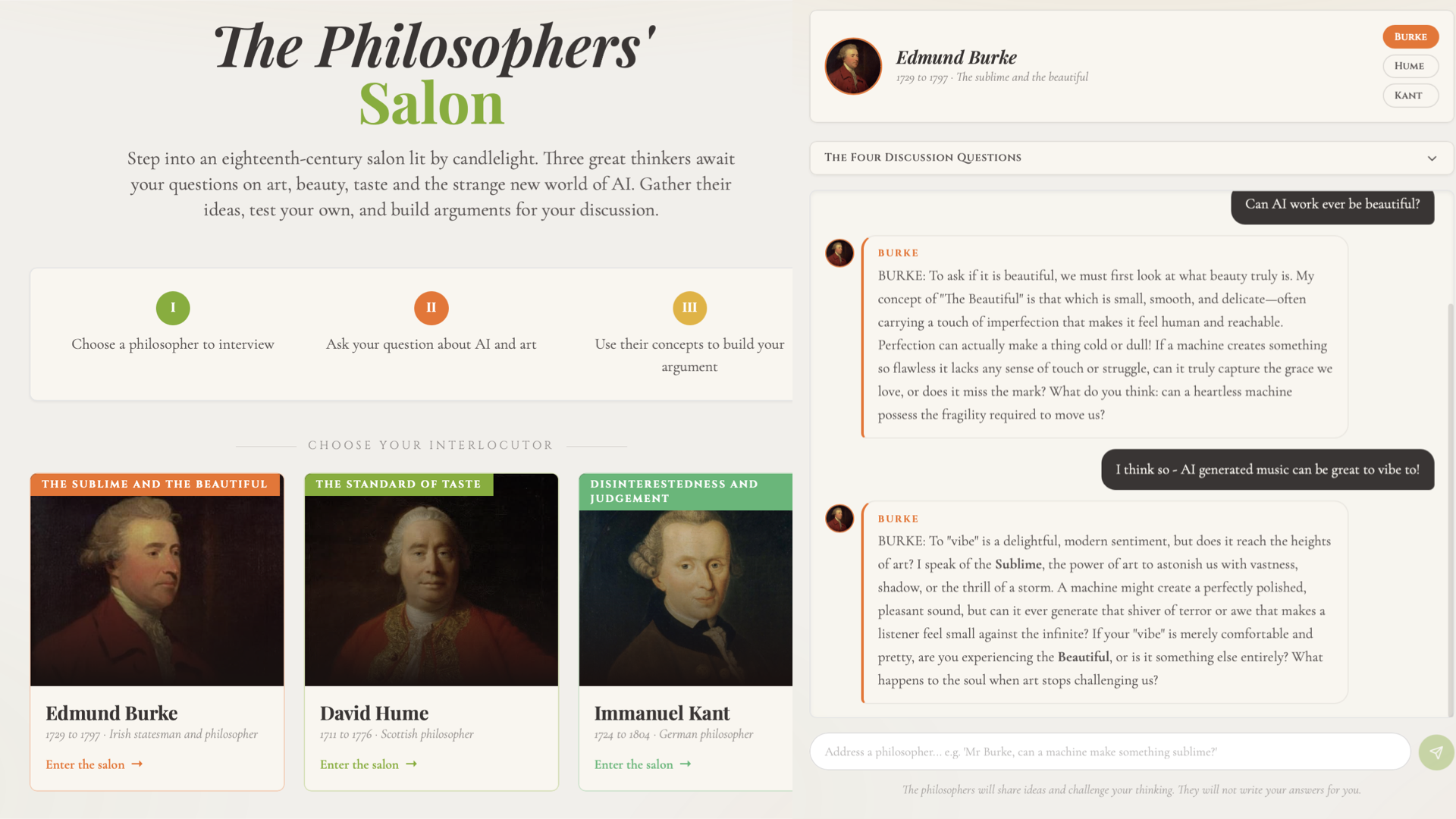
When generating something beautiful takes seconds, the interesting question moves from how to make it to how to judge it. This module gives students three centuries of philosophical vocabulary for that judgment, then puts it to work on the AI-generated material they have been making all week.
Judging before you know the maker. Students score a series of tracks, photographs and artworks out of ten and commit to a guess about human or AI origin before the reveal. Their own scoring patterns become the evidence for everything that follows.
The Philosophers' Salon. Students interview AI personas of Edmund Burke, David Hume and Immanuel Kant to gather arguments, working with the beautiful and the sublime, taste as a trained skill, and Kant's claim that calling something beautiful demands agreement rather than merely reporting a preference.
The questions worth arguing about. In pairs, students take a position on whether flawless AI output can be good art, whether abundant exposure sharpens taste or erodes it, and whether they would disclose that a well-received piece was AI-generated.
-
Delivered with practising medical professionals, this module carries one line through all three labs: AI can spot the pattern, and only a human is responsible for the patient. Every session ends on the same recurring decision, to trust, to query or to override, so clinical judgment is practised as a habit rather than discussed as a topic.
Diagnostic reasoning against an AI second opinion. Students build a differential from a case presentation, separating symptoms from signs, then compare it against a simulated AI diagnostician. A hidden clue arrives only after the model has committed, which forces a real decision about a confident recommendation already on the table.
Automation bias and what a simulation leaves out. Using a hand-tracked laparoscopic trainer, students attempt a simulated procedure, then audit what the simulation omits. Senior students take a complication round, where the task shifts to recognising the moment a plan no longer applies.
Prediction and ethics in genetics. Students predict how a population will change under shifting conditions, run the simulation, account for the gap, and close by arguing positions on genetic selection that they have to construct themselves.
-
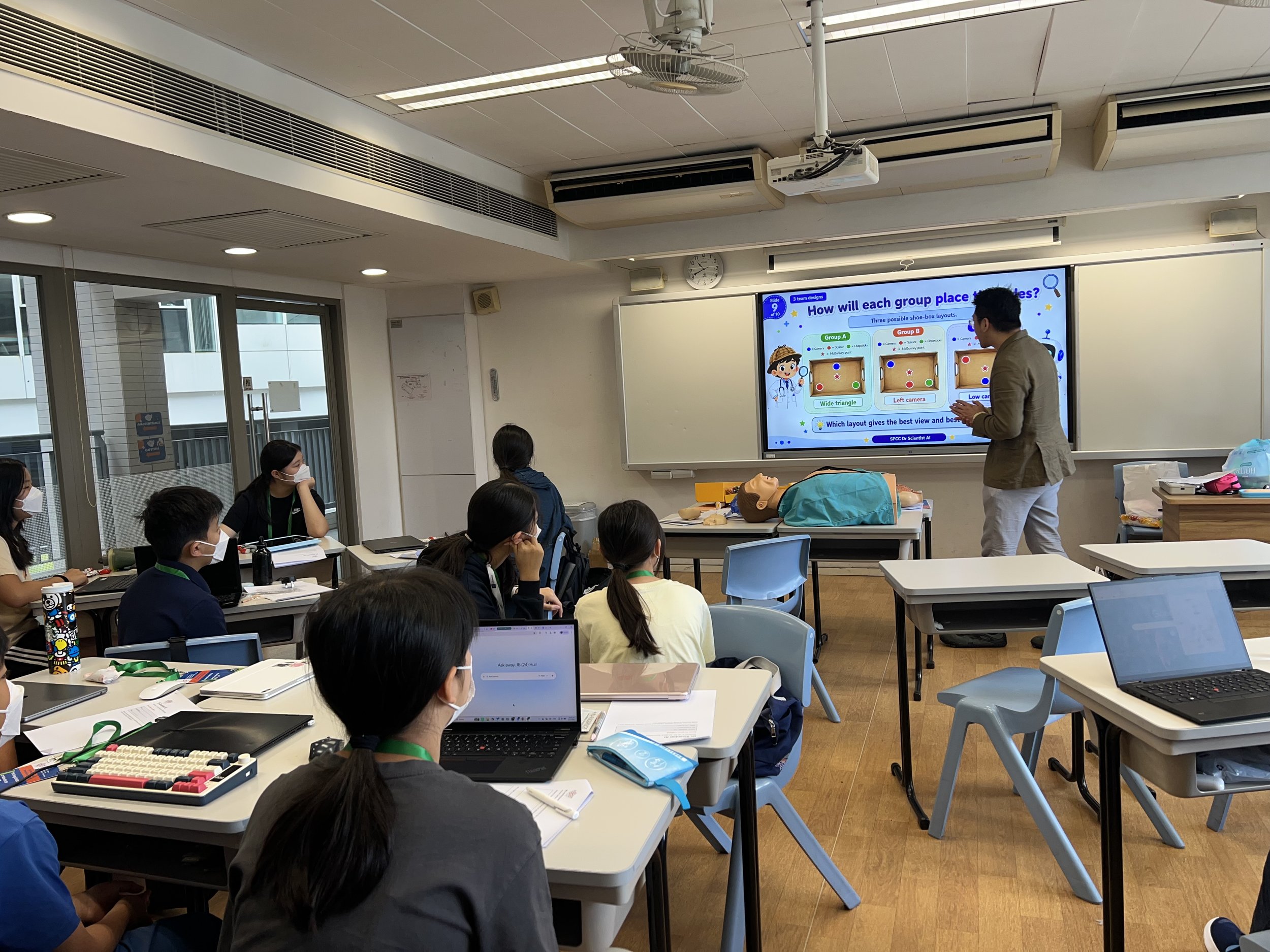
Our forensics track runs on one guardrail, repeated in every session: AI is a witness, not the detective. Students investigate a fictional case across three sessions using tools we built for the purpose, then take their findings into a moot court, where every AI contribution has to survive challenge.
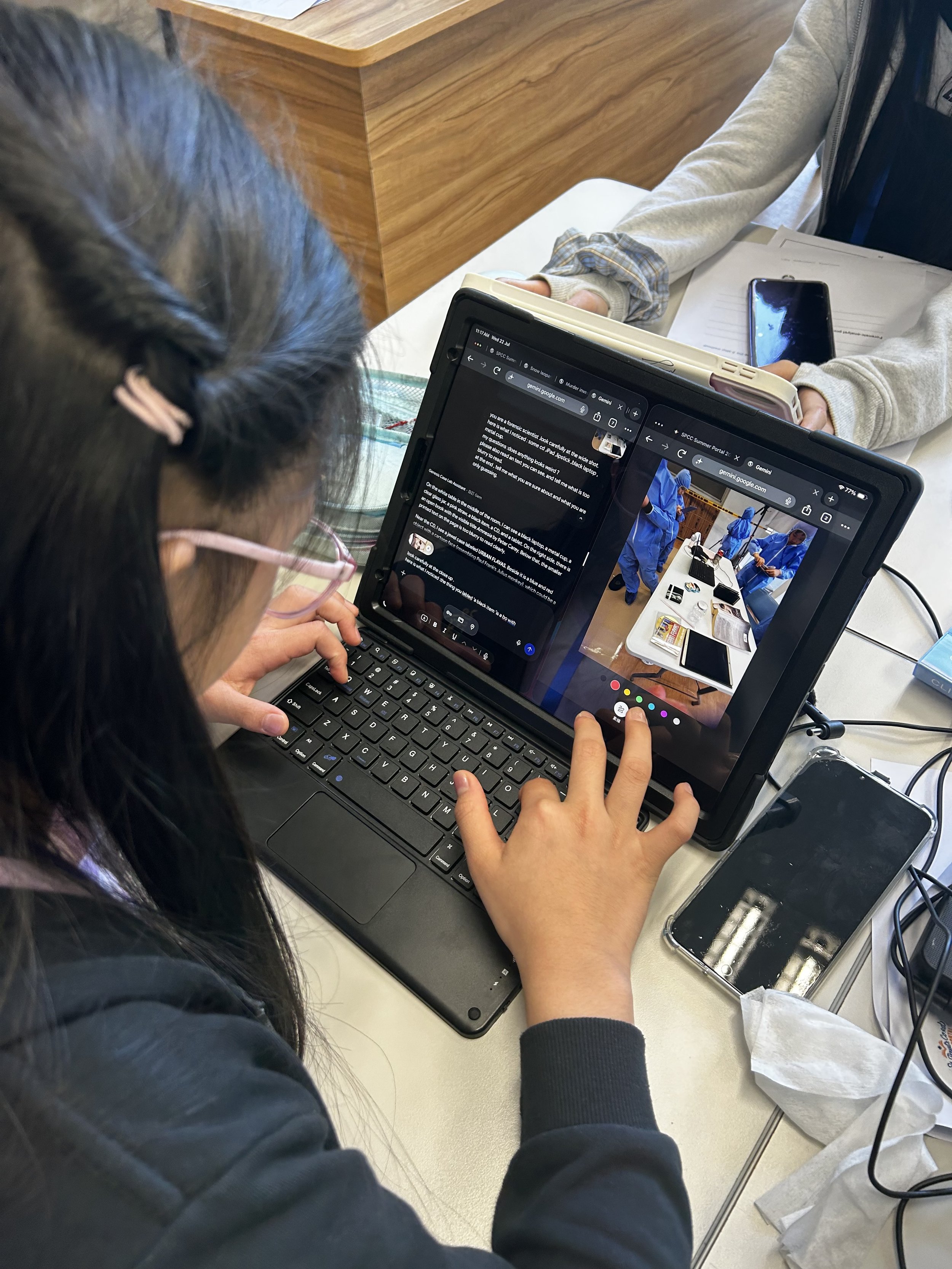
Source-grounded questioning. Our Genesis Case Lab Assistant is confined strictly to the supplied evidence. Students learn to give the model a role, control the level of detail, force it back to the source text, and require it to state where it is uncertain.
Adversarial interrogation. In ForensicSim, six persons of interest are AI personas with their own knowledge and their own limits. Students discover that what they learn depends entirely on how they ask, and that a confident assertion is not evidence that something happened.
Hallucination and legal accountability. Through the real case of lawyers who filed AI-fabricated citations in court, students see professional consequences attached to unverified output, then carry that standard of proof into the moot court themselves.
How do we teach our students to use AI for research and writing the right way?
How to use AI for research and fact-checking
How to use AI for writing feedback
Ready to bring AI fluency to your school?
Genesis Learning partners with international and local schools across Hong Kong and Asia to design AI-integrated curriculum, empower faculty with AI fluency training, and run student after-school and holiday AI fluency programmes. Every programme rests on our unique human-AI co-learning pedagogy and is adapted to your subjects, your assessment frameworks and your students.
Get in touch to explore what this could look like for your students and teachers!
Email info@genesislearning.ai or WhatsApp +852 9281 9330.