Teacher training and parent talks
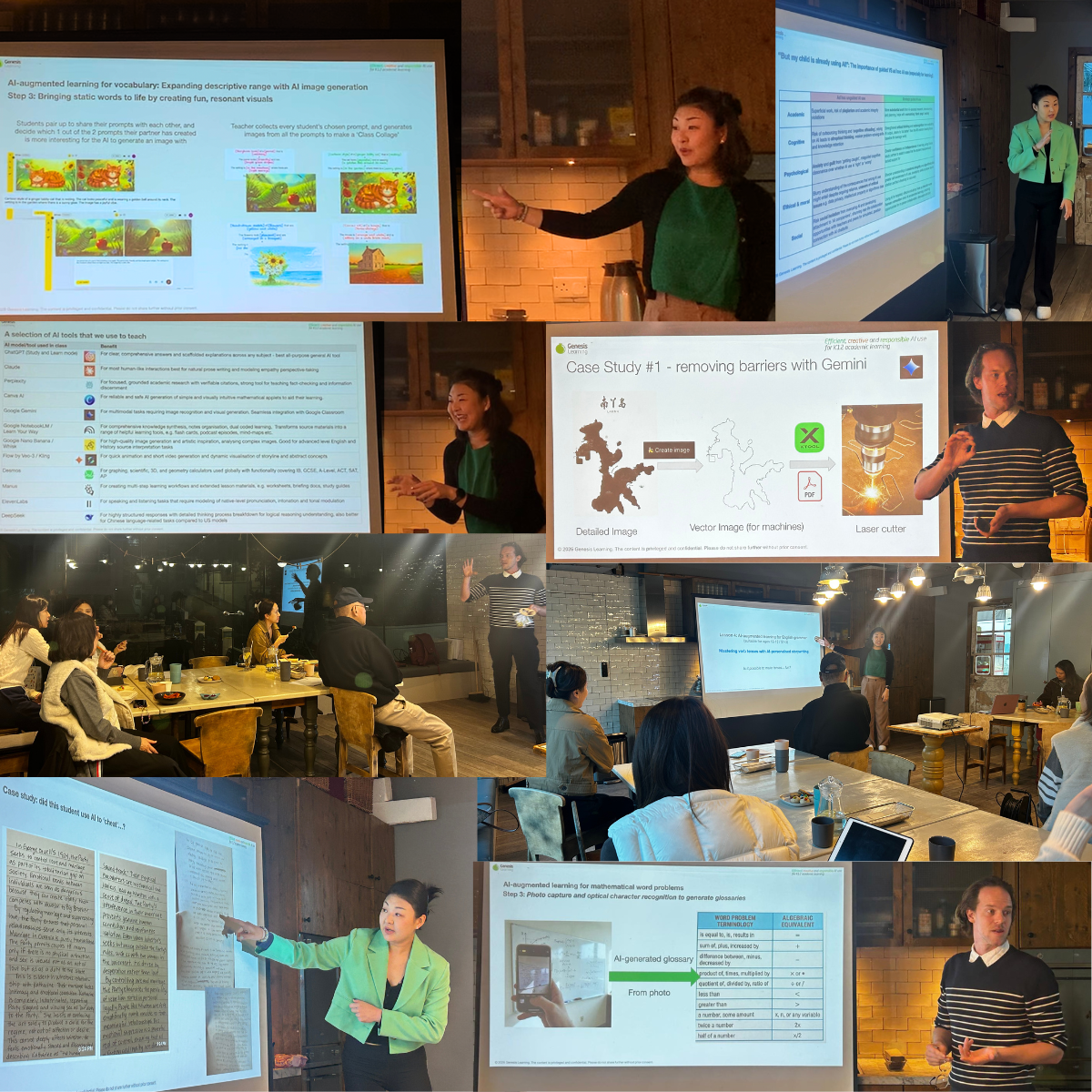
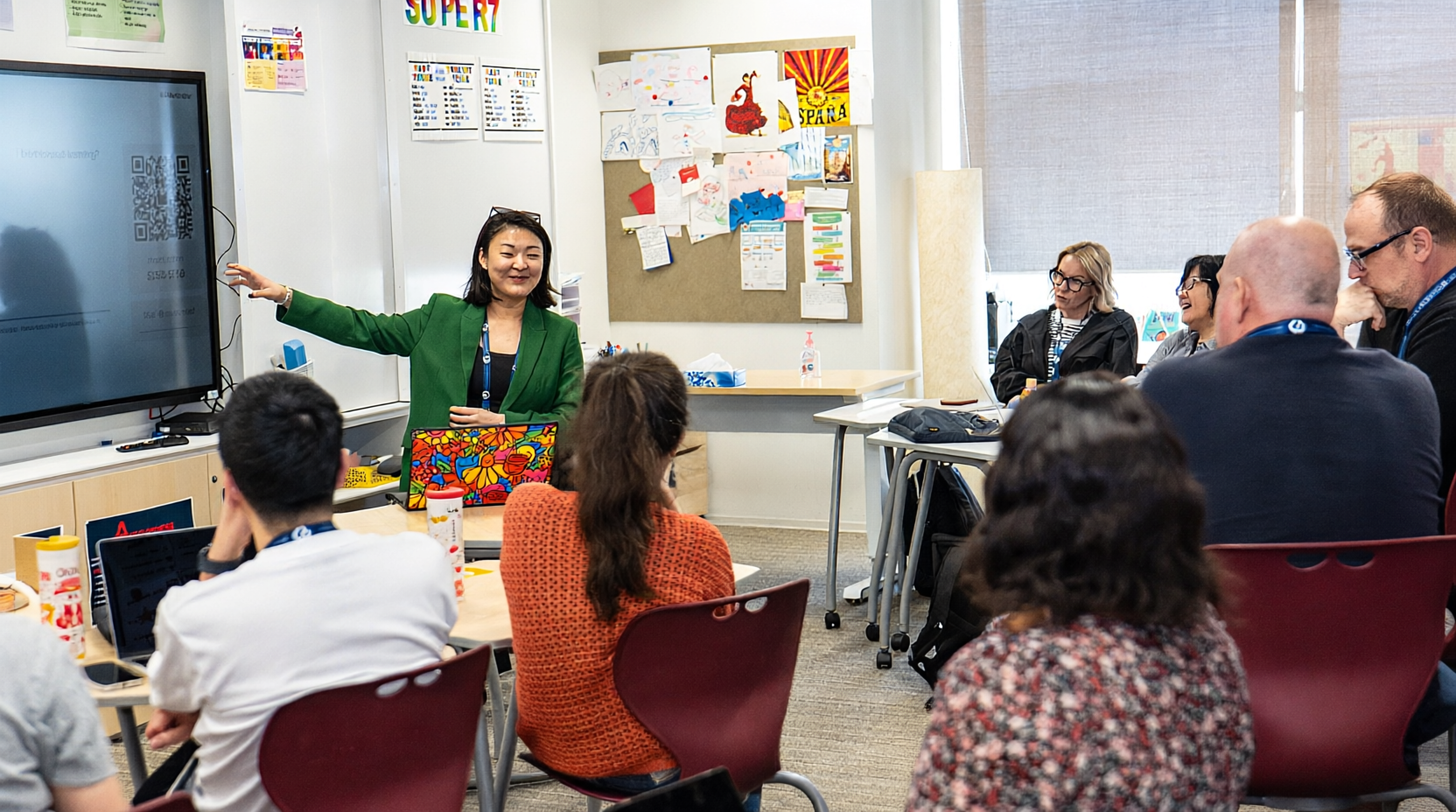
We host regular teacher training workshops and parent awareness talks on AI use cases for learning and teaching, AI’s impacts and risks on education, strategies for guiding students in using AI in smart and safe ways - and more.
If you are interested in hosting an AI fluency teacher training workshop or an AI awareness parent talk at your school or organization, please reach out to info@genesislearning.ai or WhatsApp +852 9281 9330.
Teacher training workshops
18 August 2026 (Victoria Shanghai Academy, Hong Kong)
‘Empowering teachers with AI fluency: 4 use cases of addressing AI-related learning challenges’
We led a a teacher sharing session at Victoria Shanghai Academy, opening the 2026/27 academic year with an exploration of what we framed as the educator's dilemma: how to protect students' critical thinking when AI is everywhere.
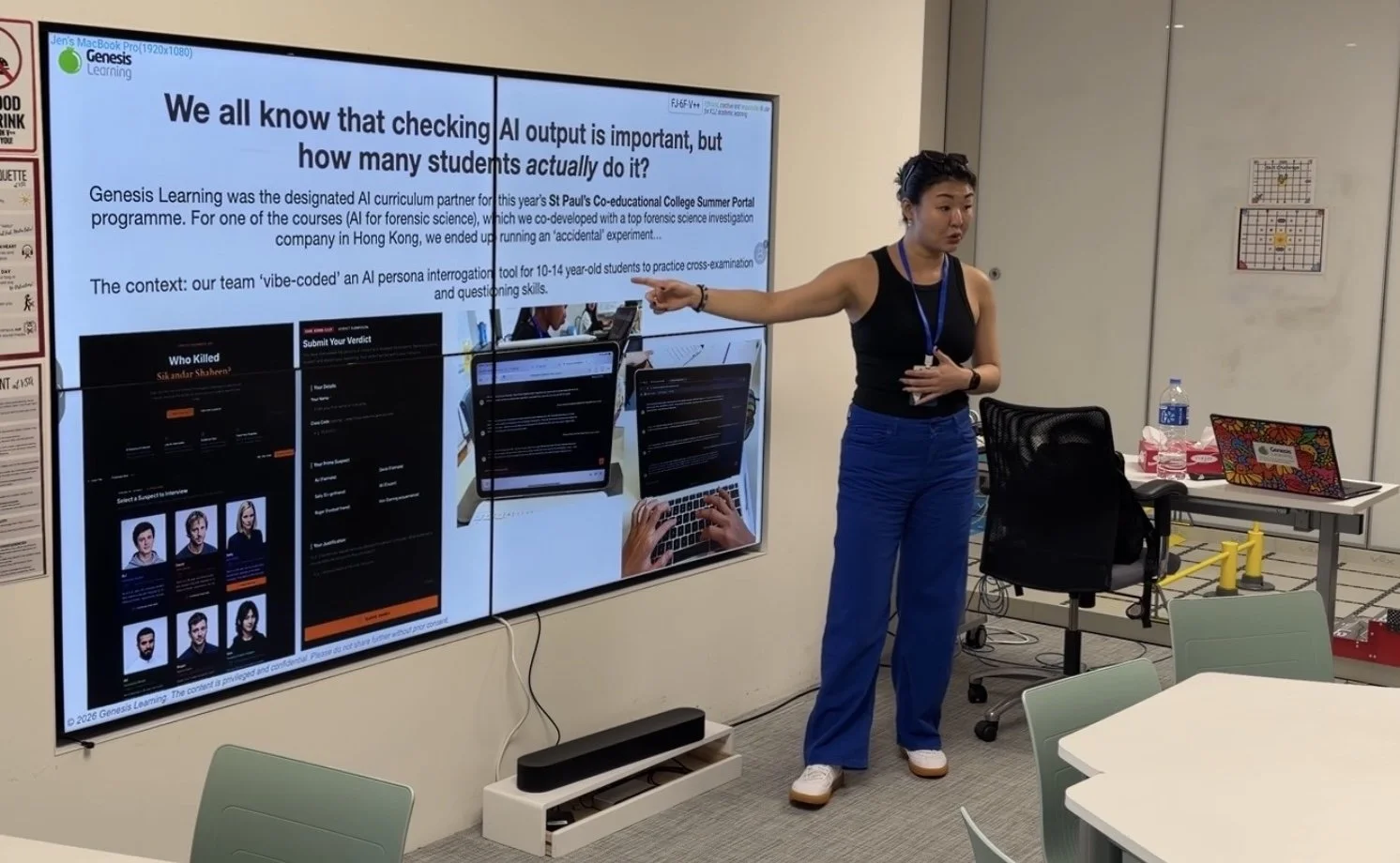
Drawing on VSA's own faculty AI poll and four use cases from Genesis programmes, the session examined how to protect productive struggle, manage cognitive offloading, counter metacognitive laziness, and navigate the illusion of mastery. We shared use cases featuring a teacher-built writing feedback ‘Gem’ with constraints preventing flattery and unsolicited rewriting, research workflows using Perplexity's Model Council, an AI persona interrogation activity from a summer programme course we ran at a top local school in Hong Kong, and an AI for songwriting module that has motivated students towards poetry.
This workshop ended with a lively discussion among teachers about the need to transform assessment design, with teachers sharing approaches from podcast submissions to real-time performance-based tasks.
25 May 2026 (Yew Chung International School, Pudong Shanghai, Shanghai China)
‘Real-time research with AI-augmented feedback in the English classroom’
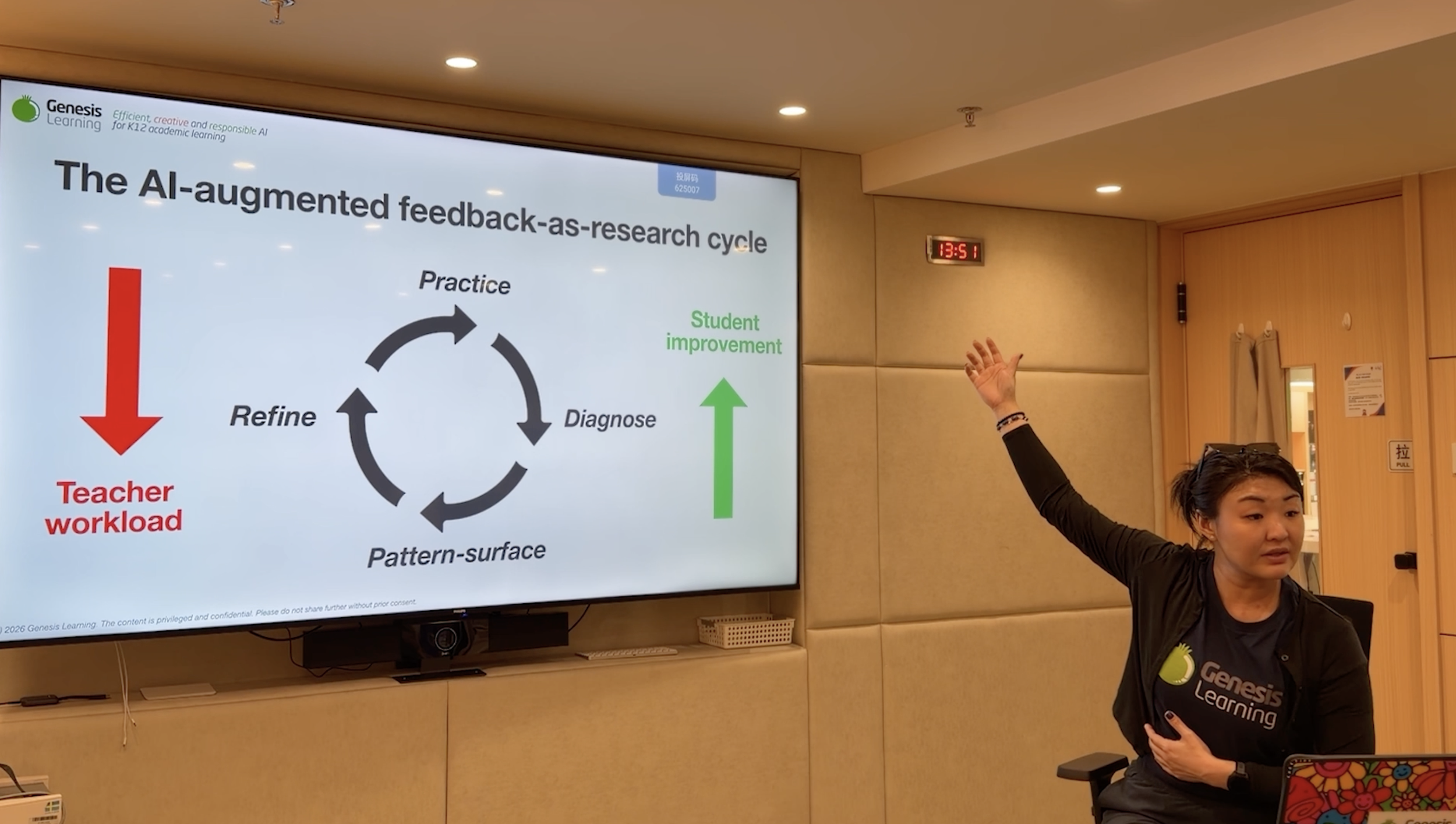
In this session, we tackled one of teachers' most persistent pain points: the feedback 'lag' - the delay between students writing and receiving meaningful guidance on how to improve. We introduced a 4-step AI-augmented 'feedback-as-research' cycle, demonstrated live for a class of up to 30 Year 10 IGCSE English Language students completing a timed descriptive writing task. Using a structured prompt to analyse 30 anonymised essays against the IGCSE English Language Descriptive Writing Assessment Objectives (AO), the session showed how AI can surface class-wide patterns in minutes, generate a heat map of relative strengths and weaknesses, and produce a targeted 15-minute practice set, shifting the teacher's role from essay-marker to pattern-analyst and transforming feedback from a private grade into a shared, collaborative improvement challenge.
22 May 2026 (Norwegian International School, Hong Kong)
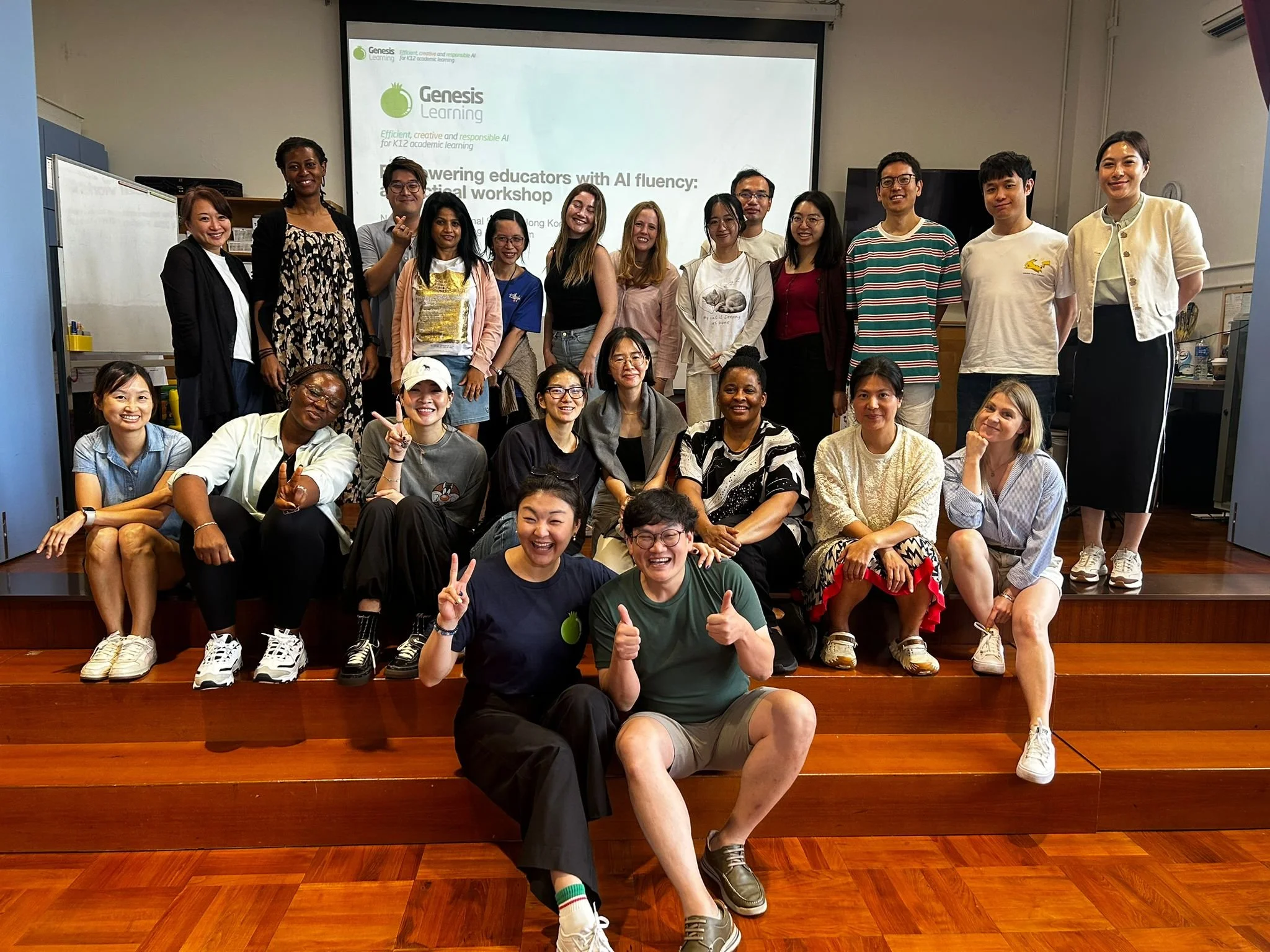
‘Empowering educators with AI fluency: a practical workshop’
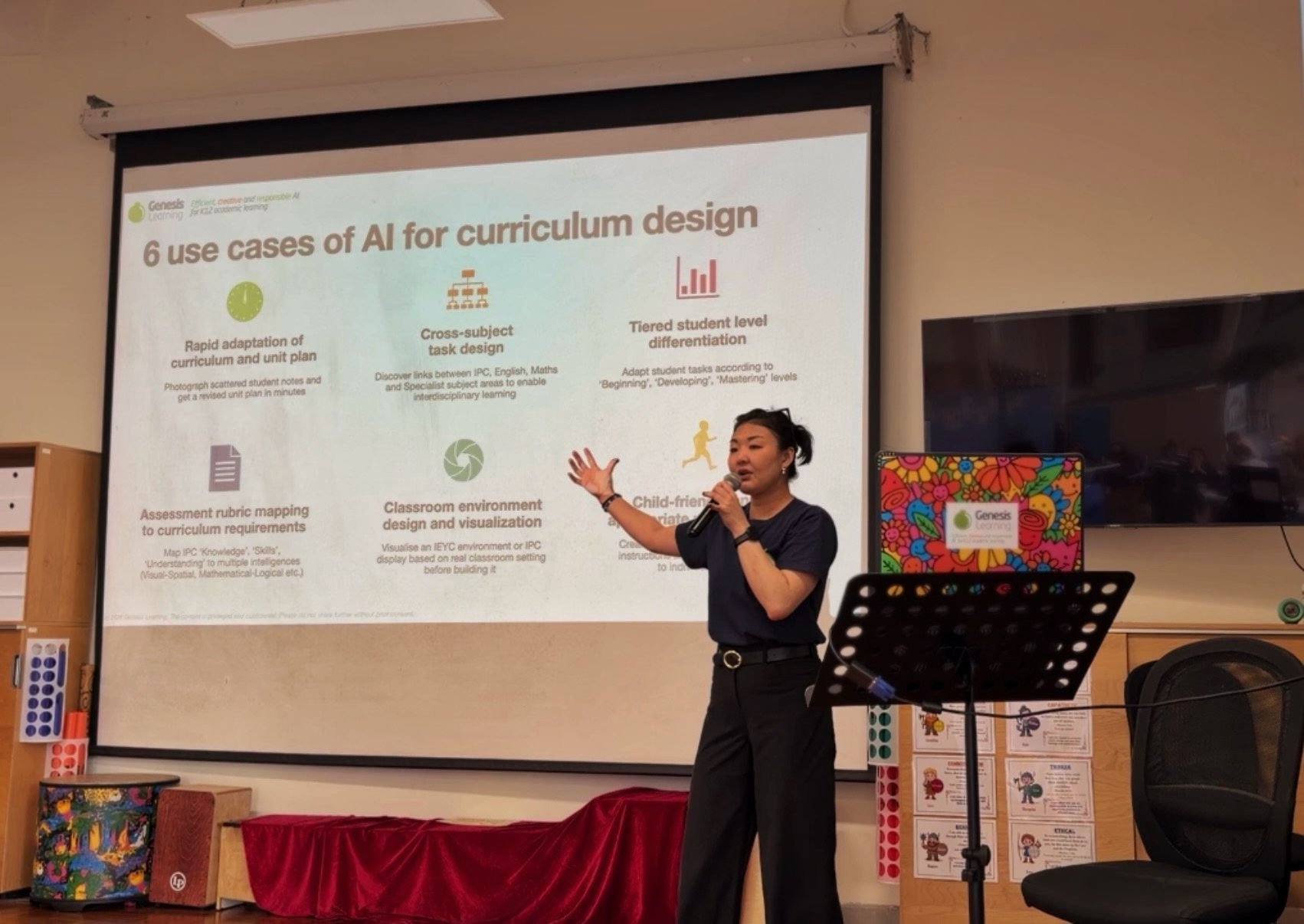
Delivered as a full-morning teacher training workshop at Norwegian International School, this hands-on session guided educators through what it truly means to teach in the age of AI. We moved beyond surface-level tool adoption to build an AI-fluent mindset: structured in two parts, the workshop opened by exploring teacher identity and how AI reshapes the teacher's role, before diving into 10 practical use cases for curriculum design and capacity-building. Teachers actively practised prompting techniques using a Situation–Problem–Aspirations–Results–Kismet (SPARK) framework, with worked examples spanning cross-subject task design (History × English), wholesale resource bank updates, and real-time workshop adaptation using NotebookLM. Participants left with concrete, immediately applicable strategies for integrating AI purposefully into their classrooms — while keeping human judgment firmly at the centre.
11 April 2026 (Yokohama International School, Yokohama Japan)
‘How efficient, creative and responsible AI use can transform high school English learning’
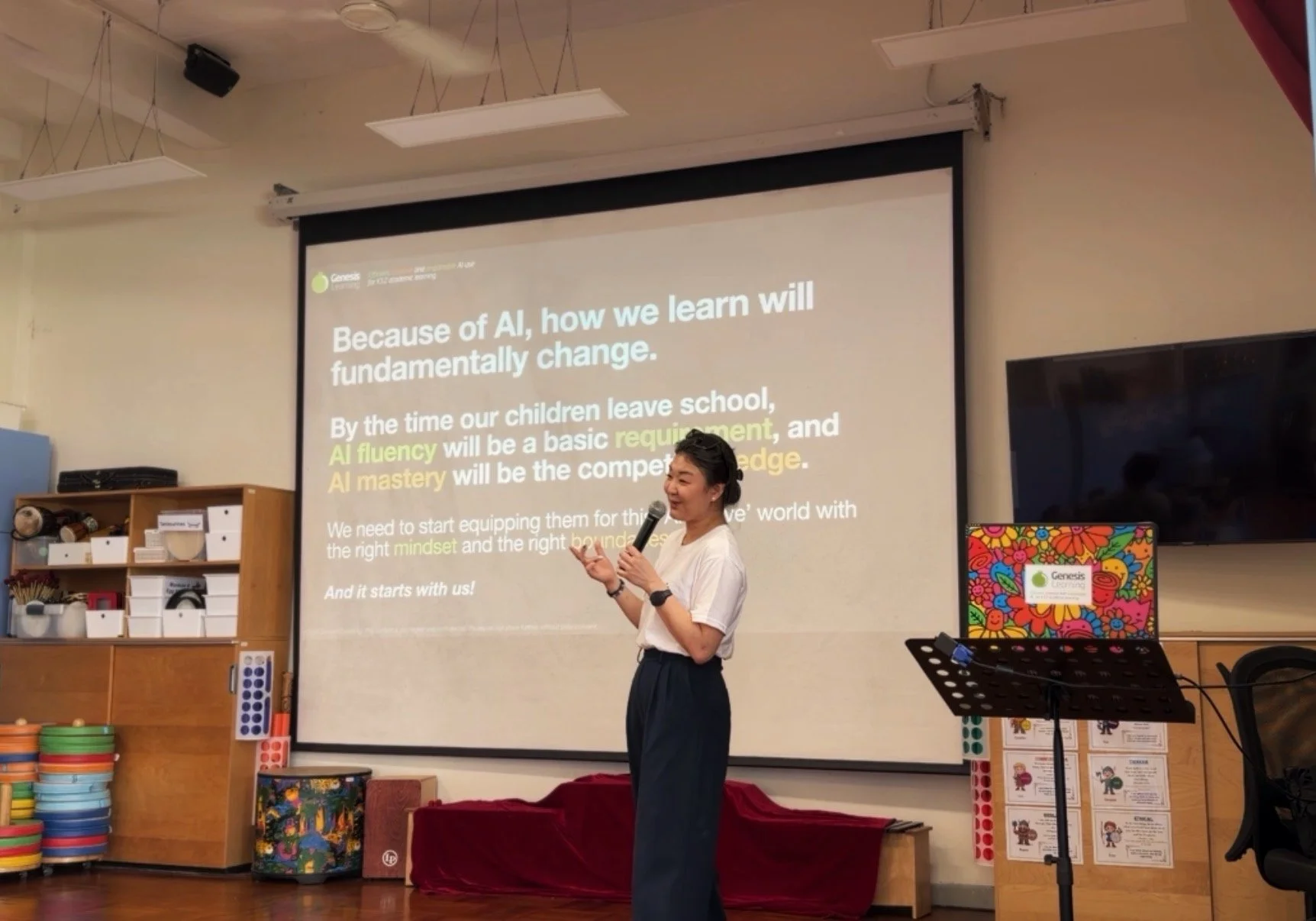
Presented at the 2026 AI and Future of Education Conference (AIFE), our founder shared three concrete use cases for efficient, creative, and responsible AI use in high school English — from using NotebookLM to generate structured quote banks that free up class time for analysis, to vibe-coding RPG games that embed historical context through gameplay, to building a transparent attribution culture that replaces fear-based AI detection with trust and student accountability. The audience comprised of school leaders and experienced educators from international schools and universities in Japan, Southeast Asia and USA.
26 January 2026 (American International School Guangzhou, Guangzhou China)
‘5 observations from teaching AI-augmented learning for IB Approaches to Learning (ATL) skills’
Drawing on direct classroom experience with IB MYP and DP students, our founder shared five observations on how AI augmented learning develops core IB skills, from critical thinking and iterative communication to self-directed research and peer modeling. The talk covered the IB's own AI policy, real student case studies, and five concrete recommendations for how IB schools can build an AI-fluent learning culture that prioritizes judgment, curiosity, and responsible use over compliance.
More to come! Email info@genesislearning.ai or WhatsApp +852 9281 9330 to enquire.
AI parent talks
28 May 2026 (Norwegian International School)
‘A guide to AI-savvy parenting: navigating the AI for K-6 children landscape’
Delivered at the primary campus of NIS, this session helped families of K-6 students develop a clear-eyed, confident understanding of AI, separating myth from fact through an opening icebreaker before exploring what AI chatbots actually are (and how they differ from Google Search), what the emerging evidence says about AI's impact on children's learning and development, and two critical risk areas unique to younger children: AI for companionship and the social-emotional risks of over-reliance, and AI for identity — covering deepfakes, voice cloning, and the importance of verification. We introduced parents to practical, age-appropriate tools and activities parents can explore with their children at home, including Google's AI Quests, equipping families to move from anxiety to agency in navigating AI together.
21 April 2026 (The Hive Hong Kong)
‘How to guide your child to use AI the safe and smart way’
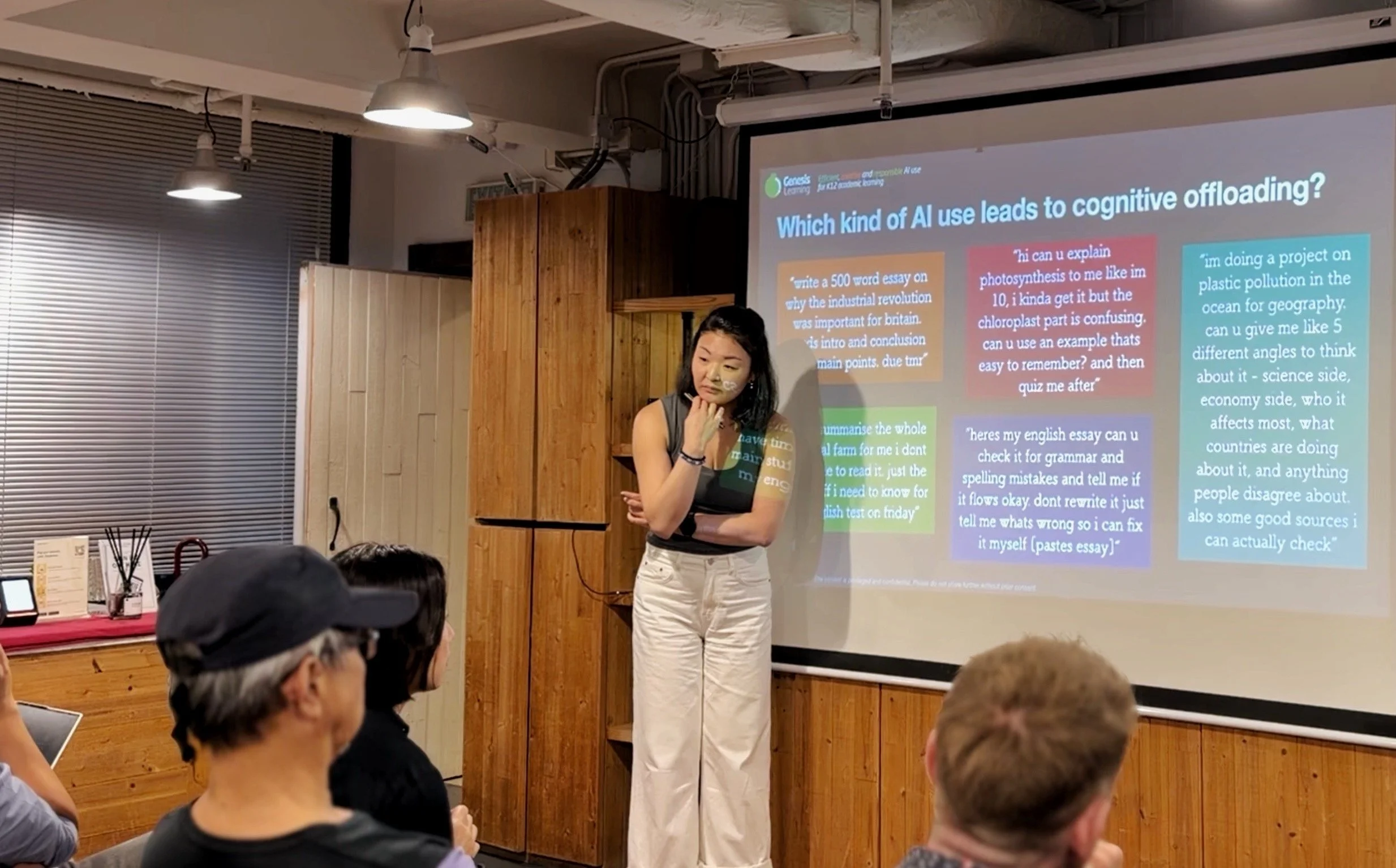
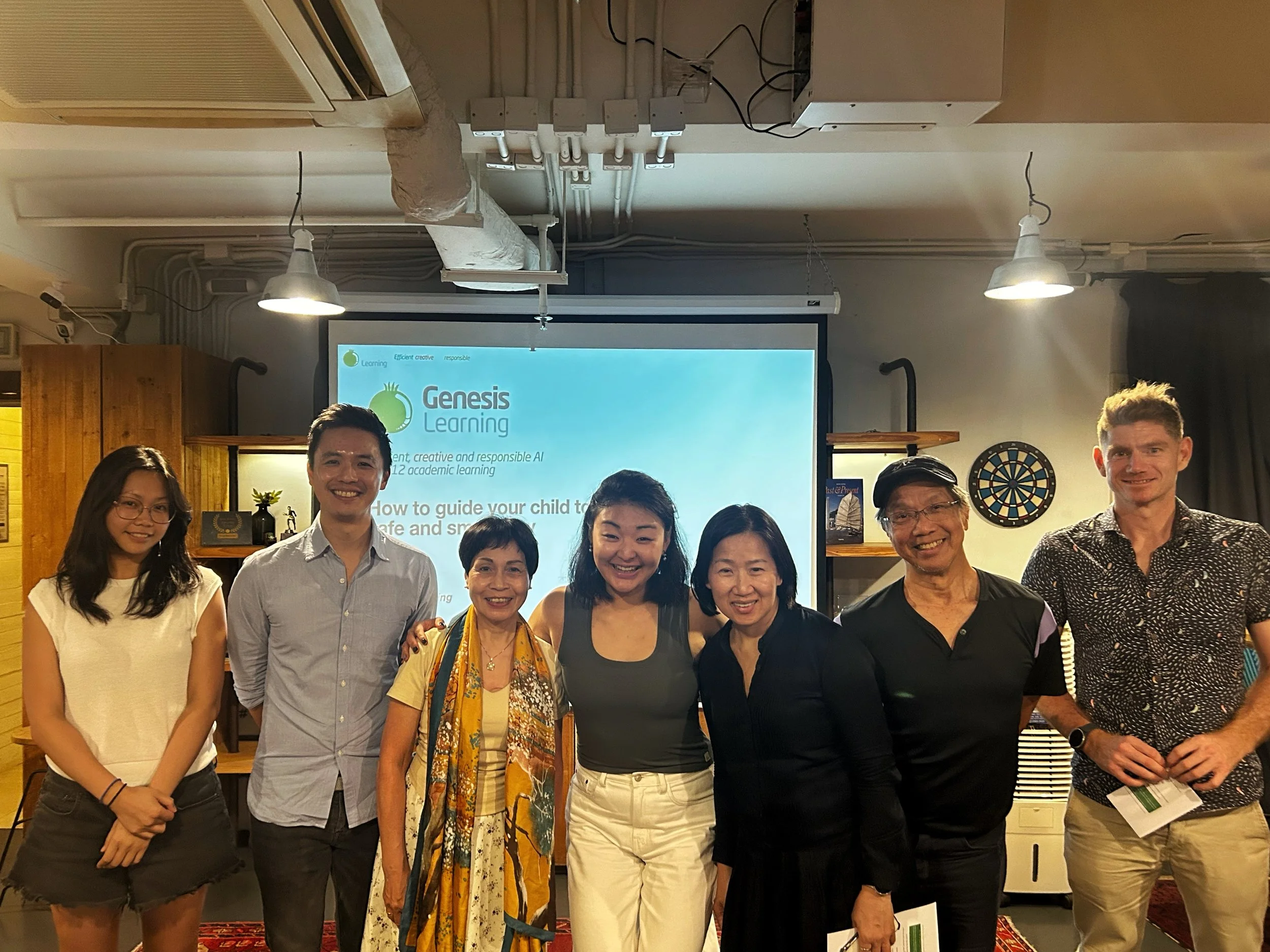
Co-hosted with the largest co-working community in Hong Kong, we hosted a fireside chat with parents and educators about the 4 biggest risks of AI for kids today, including deepfakes and identity abuse, AI companions and emotional dependency, and academic over-reliance that erodes critical thinking. Our founder shared evidence-based insights and concrete recommendations about the age-appropriate AI tools that parents can explore with their children, and tips on how to shift the conversation from fear to future-readiness, with a focus on equipping the younger generation with the skills and judgment to use AI well. View a snippet of the session here.
20 March 2026 (Marymount Secondary School)
‘Personal statement preparation - in the AI era’
Delivered at Marymount Secondary School, one of Hong Kong’s top all-girls schools, we guided parents and students through UK, US and HK university application and personal statement preparation in the AI era, covering how AI has changed university admissions, why originality and voice matter more than polish now that AI can write fluently, and exactly where AI helps (organizing achievements, academic research, proofreading) versus where it cannot replace genuine human experience and judgment.
12 February 2026 (Kindhood Hong Kong)
‘4 use cases - how can we use AI to improve student learning in English and STEM?’
This was a sequel to our first parent talk at Kindhood, where we shared four classroom-tested use cases of AI-augmented learning in English and Maths for K-12 students — covering vocabulary building, creative writing, mathematical word problems, and statistics — showing how AI can be used to scaffold, personalise, and deepen student understanding without replacing the core human skills of critical thinking, agency and creativity.
22 January 2026 (Kindhood Hong Kong)
‘Help! My kids are using AI to ‘cheat’… or are they? Understanding how to teach AI use the right way’
Co-hosted with Kindhood, one of Hong Kong’s premier family clubs in Repulse Bay, we explored the line between AI cheating and AI collaboration for K12 students, examining why students misuse AI for schoolwork, what responsible use actually looks like, and the risks of unguided 'cognitive offloading'. Parents left with Genesis Learning's 3+10 model of right AI use, and 5 practical recommendations for guiding their child's AI journey at home.
More to come! Email info@genesislearning.ai or WhatsApp +852 9281 9330 to enquire.